More than storage: How digitizing my family’s medical records gave me back peace of mind
Health struggles don’t just affect the body—they ripple through every part of life. I learned this when my mom’s frequent doctor visits turned our home into a maze of paper files, missed prescriptions, and stress. One missed test result almost led to a dangerous mix of medications. That’s when I started looking for a better way. What I found didn’t just organize our records—it changed how our family manages health, together. It gave me back something I hadn’t realized I’d lost: peace of mind.
The Breaking Point: When Paper Records Almost Hurt Someone I Love
It happened on a rainy Tuesday in March. My mom had been seeing a new specialist for her high blood pressure and a lingering cough. She’d had a chest X-ray the week before, but the results never made it into her file. I didn’t know that until the doctor, unaware of the recent imaging, ordered another one—and nearly prescribed an antibiotic that could’ve reacted badly with her heart medication. It was only because I happened to find the old report crumpled at the bottom of her purse that we caught it in time.
I remember sitting in that exam room, heart pounding, trying to explain to the doctor why we needed to pause. My hands were shaking. Not just from the near-miss, but from the realization: we were one forgotten piece of paper away from something much worse. This wasn’t the first time we’d lost track of something important. Over the years, we’d misplaced vaccination records, mixed up dosage instructions, and shown up to appointments without the right lab work. But this was different. This was dangerous.
That moment changed everything. I realized we weren’t just dealing with clutter—we were playing a high-stakes game of memory and luck. And our system, if you could even call it that, was failing us. Filing cabinets overflowed with folders labeled in my dad’s handwriting from ten years ago. Envelopes of test results lived in kitchen drawers. Prescriptions were scribbled on sticky notes. We were relying on paper in a world that had moved on. And worse, we were putting my mom’s health at risk every time we couldn’t find what we needed, when we needed it.
I went home that day and sat at the kitchen table, surrounded by stacks of medical papers. I felt overwhelmed, but also angry—at the system, at the lack of support, at myself for not doing something sooner. I kept asking, Why is it so hard to keep track of something this important? And then, quietly, a new question: What if it didn’t have to be this way?
Starting from Scratch: My First Overwhelming Steps into Digital Health
My first search was simple: “How to organize family medical records.” What came back was anything but simple. Apps. Cloud storage. HIPAA compliance. Encryption. Secure sharing. It felt like I’d stumbled into a foreign country without a map or a phrasebook. I didn’t know what any of these terms meant, and the more I read, the more confused I got. Was I supposed to scan everything? Store it on my phone? Share it with doctors? And how on earth did I do that without accidentally sending my mom’s cholesterol levels to my cousin’s group chat?
I downloaded three different apps in the first week—each one promising to be the solution. One looked sleek but asked for so many permissions I wasn’t comfortable giving. Another required me to manually enter every single medication, symptom, and visit—something I knew I’d never keep up with. The third was so complicated that even after watching their tutorial twice, I still couldn’t figure out how to upload a single document. I felt like I was failing before I’d even started.
What made it harder was the weight of what I was trying to protect. This wasn’t just about photos or recipes. These were medical records—private, sensitive, life-impacting. I couldn’t afford to make a mistake. I kept imagining headlines: “Family’s Health Data Leaked in App Breach.” I didn’t want to be that story. So I paused. I took a step back and asked myself: What do I actually need? Not what the tech world thought I should want, but what would work for my family—real people, not tech experts.
I realized I didn’t need every feature. I didn’t need AI-powered symptom checkers or fancy dashboards. I needed something simple, secure, and easy enough that my mom—or my brother, who barely uses email—could access it without frustration. I needed peace of mind, not a digital overhaul. That shift in mindset helped me cut through the noise. Instead of chasing the most advanced tool, I started looking for the most human one.
Finding the Right Tool: Simplicity Over Features
I found it almost by accident. A friend mentioned she used a certain app to keep track of her kids’ immunization records. “It’s not fancy,” she said, “but it’s the one thing my mother-in-law actually uses.” That was the clue I needed. If someone who thought email was “too complicated” could use it, maybe it was worth a try.
The app was clean, straightforward. It didn’t bombard me with options. Instead, it guided me through setting up profiles for each family member, then walked me through scanning documents using my phone’s camera. No special scanner needed. It automatically detected the edges of the paper, cropped it, and saved it as a clear PDF. Even better, it could recognize the type of document—like a lab report or prescription—and file it in the right category. I didn’t have to name or sort anything manually.
Security was built in. Everything was encrypted, stored in HIPAA-compliant servers—meaning it met strict U.S. privacy standards for health data. I could set up two-factor authentication, so even if someone got my password, they couldn’t get in. And I could control exactly who saw what. I didn’t have to share everything with everyone. That mattered—especially for my dad, who’s private about his health but still wants us to be prepared in an emergency.
But the real test came when I showed it to my aunt. She’s 72, uses her phone mostly for calls and weather updates, and once called me in a panic because she thought she’d “broken” her iPad by swiping the wrong way. I sat with her, showed her how to open the app, how to find her diabetes records, how to show them to her doctor. She did it—on her own. And then she said, “This is like having a filing cabinet that doesn’t fall over.” That was the moment I knew I’d found the right one.
Building the System: Turning Chaos into Clarity, One Scan at a Time
The next step was the big one: getting everything into the system. Years of records. Multiple doctors. Different hospitals. I didn’t try to do it all at once. Instead, I broke it down. One hour a day, five days a week. One folder at a time. I started with the most urgent: current medications, allergies, and recent test results. Then I moved to chronic conditions—my mom’s hypertension, my dad’s joint replacements, my sister’s asthma history.
I set up a small table in the spare room with my phone, a stack of papers, and a trash bin. As I scanned each document, I’d quickly review it—sometimes learning things I didn’t know. Like the fact that my dad had a minor heart procedure in 2008 that no one had mentioned in years. Or that my mom’s thyroid levels had been creeping up for a while, long before her diagnosis. These weren’t just files—they were stories, clues, pieces of our health history I’d never seen all together before.
The app let me tag each document by date, doctor, condition, and type. I could search by keyword—“MRI,” “insulin,” “allergy”—and find what I needed in seconds. No more digging through drawers or calling clinics for copies. I created a checklist for each family member: Have we scanned all immunizations? Are emergency contacts up to date? Is the advance directive saved? Slowly, the chaos turned into clarity.
There were emotional moments, too. Scanning my grandmother’s old medical notes—handwritten, faded—felt like holding a piece of her. I didn’t just see her diabetes treatment. I saw her doctor’s careful handwriting, the dates of visits during family holidays, the notes about her garden. It reminded me that health records aren’t just data. They’re part of our family story. And now, they were preserved—not in a box in the attic, but in a place where they could actually be used, when it mattered most.
Sharing Without Stress: How My Family Finally Stayed in Sync
One of the biggest changes was how we shared information. Before, I was the unofficial gatekeeper. Everyone came to me for records, copies, updates. I’d email scanned pages, text photos of prescriptions, or drive across town with printed reports. It was exhausting—and risky. What if I was unavailable during an emergency? What if I sent the wrong file?
The digital system changed that. I could give each family member their own login. My brother could see my mom’s current medications but not her mental health notes. My dad could share his surgical history with his cardiologist without me being in the middle. We set up emergency access too—if something happened to me, two trusted family members could unlock my account with a code.
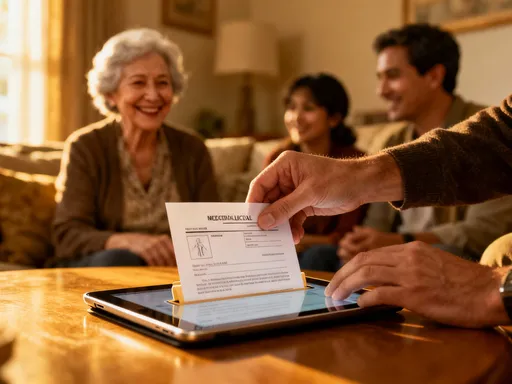
The first time we used it together was during my mom’s follow-up appointment. Her doctor asked for her last three blood pressure logs. Instead of fumbling through her bag, I pulled up the app, found the documents, and showed them on my phone—securely, instantly. The doctor looked surprised, then impressed. “Most families don’t have this kind of continuity,” she said. “It makes a real difference.” That small moment meant everything. We weren’t just organized—we were proactive.
We also started using it for planning. When my nephew needed surgery, we pulled up his vaccination records in minutes. When my sister moved to another state, she took her entire health history with her—no delays, no lost files. We even used it to prepare for flu season, checking who’d had their shots and who needed reminders. It became part of our routine—quiet, reliable, always there.
The Ripple Effect: Time, Confidence, and Better Decisions
The benefits went far beyond convenience. We stopped repeating tests because records were missing. My mom avoided a duplicate MRI that would’ve cost hundreds and added unnecessary stress. When my dad had a fall, we sent his full medical history to the ER within minutes—medications, allergies, past surgeries. The staff said it helped them treat him faster and safer.
But the biggest change was in how we engaged with healthcare. I stopped feeling like a passive bystander. With all the information in one place, I could ask better questions. I noticed patterns—like how my mom’s blood pressure spiked during certain medications or how her energy dropped after specific treatments. I brought those observations to her doctor, and together, we adjusted her plan. I wasn’t just managing records. I was participating in care.
My siblings noticed it too. “I feel less guilty now,” my brother said. “I used to worry I wasn’t doing enough. Now I can check in anytime, see what’s going on, and help when needed.” That sense of shared responsibility lifted a weight off all of us. We weren’t just reacting to crises—we were staying ahead of them.
And the time we saved? It added up. No more phone calls to clinics for copies. No more driving across town with paper files. No more frantic searches the night before an appointment. That time became space—space to breathe, to focus on healing, to just be a family.
It’s Not Just About Records—It’s About Peace of Mind
Looking back, I realize this wasn’t just about technology. It was about care. About love. About wanting the people I love to be safe, seen, and supported. The app didn’t replace anything human—it made the human part easier. It gave me the tools to be a better daughter, sister, and aunt. It didn’t take over. It stepped aside.
Peace of mind isn’t dramatic. It doesn’t come with a fanfare. It comes in quiet moments: knowing you have the right document when the doctor asks. Sleeping through the night because you’re not worried about losing something important. Watching your mom walk into an appointment with her head up, because she knows her history is clear and complete.
I used to think technology was cold, impersonal, something that complicated life more than it helped. But this experience taught me that the best tech doesn’t feel like tech at all. It feels like relief. It feels like control. It feels like being able to focus on what really matters—your family’s health, your time together, your shared well-being.
If you’re still managing medical records in paper folders, I get it. It’s familiar. It’s what we’ve always done. But I also know what it’s costing you—time, stress, and the quiet fear that something could go wrong. You don’t have to be a tech expert to make a change. You just have to care enough to try. Start small. Scan one document. Set up one profile. Take one step toward clarity.
Because at the end of the day, this isn’t about apps or features or digital storage. It’s about protecting what matters most. It’s about knowing you’re doing everything you can for the people you love. And sometimes, the most powerful thing you can give someone isn’t a cure—it’s the comfort of knowing they’re not alone, and nothing important will be lost.