After Joining 7 Online Fitness Communities, This One Gave Me Back My Weeknights
Remember those weeknights when all you wanted was to relax, but guilt whispered you should be “doing something healthier”? I did. For months, I bounced between skipping workouts and over-scheduling classes that left me more drained. Then I found a small online fitness community that didn’t demand perfection—just presence. It reshaped not just my routine, but how I see balance. No extreme schedules, no pressure. Just real life, moving gently. And honestly? It changed everything.
The Burnout That Began with Good Intentions
Let’s be real—most of us start fitness with hope, not dread. I remember standing in front of my closet one Monday morning, pulling out yoga pants I hadn’t worn in weeks, feeling a mix of excitement and guilt. I wanted to feel strong again. I wanted to have more energy for my kids, to stop that afternoon slump at work, to look in the mirror and feel proud. So I downloaded every app I could find, signed up for live classes, and committed to six days a week. I thought if I just pushed hard enough, I’d finally become the version of myself I’d always imagined.
But within a month, that hope started to crack. I missed a Wednesday class because my youngest had a fever. I skipped Thursday because I stayed late at the office. By Friday, I felt like a failure. The app reminded me with a little red streak: “You’ve broken your chain!” And suddenly, movement—something that was supposed to help me—felt like another item on a never-ending to-do list. I wasn’t feeling stronger. I was feeling smaller, more defeated.
And I know I’m not alone. I’ve talked to so many women—moms, professionals, caregivers—who’ve been in the same boat. We’re not lazy. We’re not undisciplined. We’re just living full lives. We’re packing lunches, managing schedules, showing up at jobs, keeping homes running. And when fitness becomes one more thing we “should” do, it stops being self-care and starts feeling like punishment. The real issue wasn’t our effort—it was the expectation. We were trying to fit ourselves into rigid systems that didn’t account for real life. What we needed wasn’t more discipline. We needed flexibility. Compassion. A way to move that didn’t ask us to be perfect—just present.
Finding a Different Kind of Fitness Space Online
It was during one of those heavy, exhausted weeknights—dishes in the sink, laundry unfolded, me still in my work clothes—that I clicked on a link from a friend. “Try this,” she said. “It’s not like the others.” I didn’t expect much. By then, I’d tried seven different online fitness groups. Some were high-energy dance classes that made me feel out of place. Others were intense strength programs that left me sore for days. A few were so strict about timing and form that I felt like I was back in school, waiting to be graded.
But this one was different from the start. It wasn’t flashy. No influencers, no branded leggings, no countdown timers screaming at me to “push harder!” Instead, the welcome message said: “Welcome. However you show up, you belong here.” That alone made me pause. The community was small—only about 120 members—and invitation-only, which made it feel more personal. There were no live classes at 5 a.m. or mandatory six-day commitments. Instead, we had optional 20-minute movement sessions three times a week, always recorded, always available. What really stood out, though, was the culture.
People celebrated rest days. Someone would post, “Taking a full rest today—my body needed it,” and the replies would flood in: “So proud of you!” “Rest is part of the journey!” The coach, a woman named Maya who joined from her home in Colorado, would often say, “Movement is a gift, not a debt.” That phrase hit me like a quiet thunder. I’d never thought of it that way. I’d always seen exercise as something I owed myself—as if I had to earn rest, joy, or peace through effort. But here, movement wasn’t a transaction. It was an offering. A way to say, “I’m here. I care.” And because there was no pressure to perform, I actually wanted to show up. For the first time in years, I didn’t feel behind. I just felt… possible.
How the Community Became My Work-Life Anchor
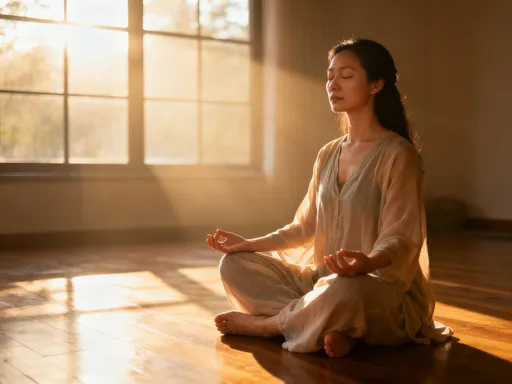
I started small. Just one session a week. A 20-minute gentle flow on Wednesday evenings. I’d log in from my living room, still in my work blouse, hair in a messy bun. But something shifted almost immediately. Instead of dreading the evening, I began to look forward to it. After the kids were in bed, after the house was quiet, that 20-minute window became mine. Not for chores. Not for scrolling. But for me.
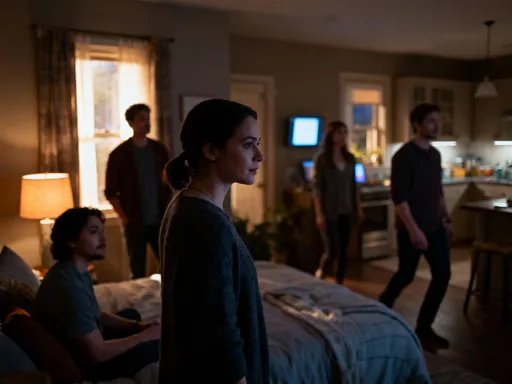
And it wasn’t just about the movement. It was about the people. I’d see familiar faces—Sarah, a teacher from Ontario, who always waved with her coffee mug in hand. Priya, a nurse from Texas, who often joined right after her night shift, still in scrubs. There was no judgment. No one cared what we wore or how much we could do. We were all just showing up, tired and real, and somehow that made it sacred.
One night, I almost skipped it. I’d had a brutal day—meetings back-to-back, a flat tire on the way home, and then a call from the school about my son’s math grade. I was emotionally drained. But I opened the link anyway, thinking I’d just sit and listen. And there, in the chat, someone had typed: “Tonight’s session is for the heavy hearts. Move slow. Breathe deep. You’re not alone.” I cried. Not because I was sad, but because I felt seen. That night, I didn’t do a single push-up. I just stretched, breathed, and cried a little more. And it was enough. That’s when I realized this wasn’t just a fitness group. It was an anchor. A soft place to land in a world that rarely slows down.
Designing Flexibility into the Routine
One of the most surprising things about this community was how little structure it actually had—and how much that helped. There was no fixed schedule. Every Sunday, members voted on which time slots would work best for the week’s live sessions. Some weeks, we met at 7 p.m. Others, it shifted to 8:30 p.m. to accommodate parents or shift workers. The recordings were always posted by noon the next day, so if life got in the way, you didn’t miss out. But here’s the thing—because it felt inviting, not mandatory, I actually showed up live more often than I ever did in rigid programs.
The platform itself was simple—just a private video room, a shared calendar, and a chat group. No fancy app. No tracking badges or leaderboards. No “streaks” to maintain. Progress wasn’t measured in reps or minutes. It was measured in how we felt. “I slept better this week.” “I didn’t dread the stairs anymore.” “I remembered to breathe during a stressful meeting.” Those were our wins.
And the reminders? They weren’t pushy. No flashing notifications or guilt-tripping messages. Just a gentle nudge: “We’ll be here if you’d like to join.” That respect for my time and energy made all the difference. I wasn’t being managed. I was being welcomed. And because the structure was flexible, it actually created consistency. I didn’t have to reshape my life to fit the program. The program fit my life. That’s the kind of design that works for real people—especially those of us who are already juggling a million things.
Beyond the Workout: Emotional Resilience and Shared Energy
Over time, the group became more than just a place to move. It became a space to be human. We started sharing more—about work stress, parenting challenges, aging parents, personal goals. When I was overwhelmed with a project at work, someone sent me a voice note: “Just breathe. We’ve got your spot for tomorrow.” When Sarah’s dad was hospitalized, we held a silent session in his honor, moving slowly with candles lit. When Priya passed her certification exam, we all cheered in the chat, some of us with tears in our eyes.
This emotional connection changed everything. I wasn’t just showing up for the workout. I was showing up for them. And knowing they were there for me made me more likely to show up for myself. Movement became tied not to guilt, but to care—self-care and community care. I started to notice that on days I joined, I was calmer, more centered, even kinder to myself. It wasn’t about burning calories. It was about building resilience.
Science actually backs this up—social support improves long-term adherence to physical activity. But I didn’t need a study to tell me that. I could feel it. When we move together, even online, we create a kind of shared energy. It’s subtle, but real. Like a quiet hum of “I see you. I’m with you.” And in a world that often makes us feel isolated, that connection becomes its own kind of strength. It doesn’t just help us stay consistent with movement. It helps us feel less alone in life.
Making It Work for Real, Busy Lives
If you’re thinking, “This sounds nice, but my life is too chaotic,” I get it. I used to think that too. But the truth is, you don’t need perfect conditions to begin. You don’t need a home gym, expensive equipment, or even an hour a day. All you need is a corner of your room, something comfortable to wear, and 15 to 20 minutes. That’s it.
The key is finding—or creating—a space that values presence over performance. Look for communities that encourage rest, celebrate small wins, and foster kindness. Avoid ones that make you feel behind, guilty, or judged. Read the tone of their messages. Do they say, “We’re so proud of you for resting,” or do they shame missed workouts? That tells you everything.
Start small. Commit to just one session a week. Use your phone’s calendar to block that time—label it “Me Time” or “Peace Hour.” No pressure. No rules. If you miss it, no big deal. Just try again next week. And if you can, invite a friend—not to compete, but to share. Text her the link. Say, “This helped me. Maybe it’ll help you too.” Connection multiplies the benefit.
You can even start your own small group. Gather a few friends, pick a weekly time, use a free video platform, and just move together. It doesn’t have to be fancy. It just has to be real. The goal isn’t to transform your body. It’s to transform your relationship with yourself—with your time, your energy, your worth.
Reclaiming Balance, One Small Movement at a Time
This journey didn’t give me a six-pack or a viral before-and-after photo. What it gave me was something deeper: peace. I no longer dread my evenings. I don’t feel guilty for resting. I’ve stopped measuring my worth by how much I do. Instead, I’ve learned to listen—to my body, my energy, my heart. And in that listening, I’ve found balance.
Fitness is no longer a disruption in my day. It’s woven into it—like breathing, like laughter, like the quiet moments after the kids are asleep. It’s not about fixing myself. It’s about honoring myself. And that shift has rippled into every part of my life. I’m more patient. More present. More gentle—with my family, my work, and myself.
So if you’re tired of programs that make you feel worse, if you’re done with the guilt and the pressure, I want to offer you this: there’s another way. One that doesn’t ask you to be perfect. One that meets you where you are. One that says, “You belong here—exactly as you are.” It might not be loud. It might not be flashy. But it’s real. And it’s waiting for you, one small movement at a time.